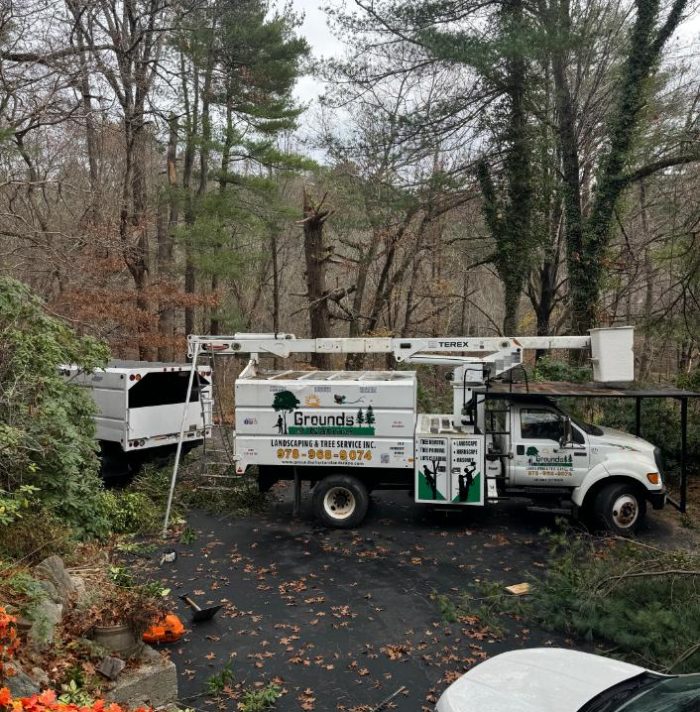
Overhanging limbs can affect vehicle access, outdoor safety, and the condition of nearby structures. Recognizing potential problems early helps property owners plan appropriate tree care.
A mature tree can add shade and natural beauty to a residential landscape. However, branches growing too close to a driveway, roof, or frequently used outdoor area may eventually create access and maintenance concerns.
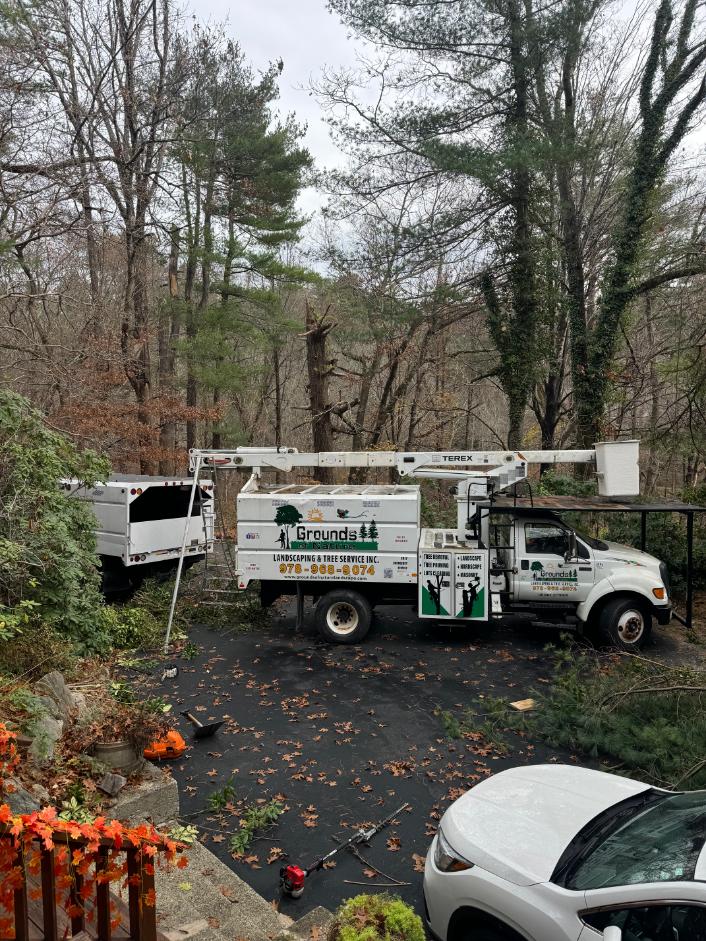
Tree branch clearance over a driveway deserves attention when limbs become low, damaged, or positioned where they may interfere with vehicles and everyday property use.
Massachusetts homeowners should inspect surrounding trees periodically, especially after strong winds, heavy rain, or winter weather.
01. Check for Branches Hanging Over the Driveway
Low-hanging branches can interfere with vehicles entering and leaving a property. Limbs that extend across the driveway may also become a concern when larger vehicles or service equipment need access.
Look for:
- Branches extending into the vehicle access area.
- Low limbs that may contact taller vehicles.
- Branches growing across frequently used entrances.
- Vegetation limiting visibility when entering or leaving the driveway.
Tree clearance should account for the driveway’s width, vehicle height, surrounding structures, and the natural growth pattern of the tree.
02. Look for Dead, Broken, or Damaged Limbs
Not every overhanging branch requires removal. However, visibly damaged or unstable branches deserve closer attention.
Warning Signs to Watch For
- Large dead branches without healthy foliage during the growing season.
- Visible cracks or splits along branches.
- Hanging limbs following a storm.
- Branches resting against roofs or other structures.
- Sections with visible decay or major damage.
Damaged branches can become unpredictable, particularly during additional wind or severe weather. Avoid standing beneath suspicious limbs or attempting to remove large hanging branches yourself.
03. Consider Nearby Roofs and Buildings
Branches growing near the house may rub against exterior surfaces during windy conditions. Repeated contact can cause unnecessary wear or damage to roof edges, siding, gutters, and other exterior features.
Inspect the space between mature trees and nearby buildings. Pay attention to limbs that touch the roof, extend over outdoor structures, or repeatedly move against the property.
Proper clearance planning should consider the tree’s long-term growth instead of focusing only on its present position.
04. Understand When Professional Tree Care Is Necessary
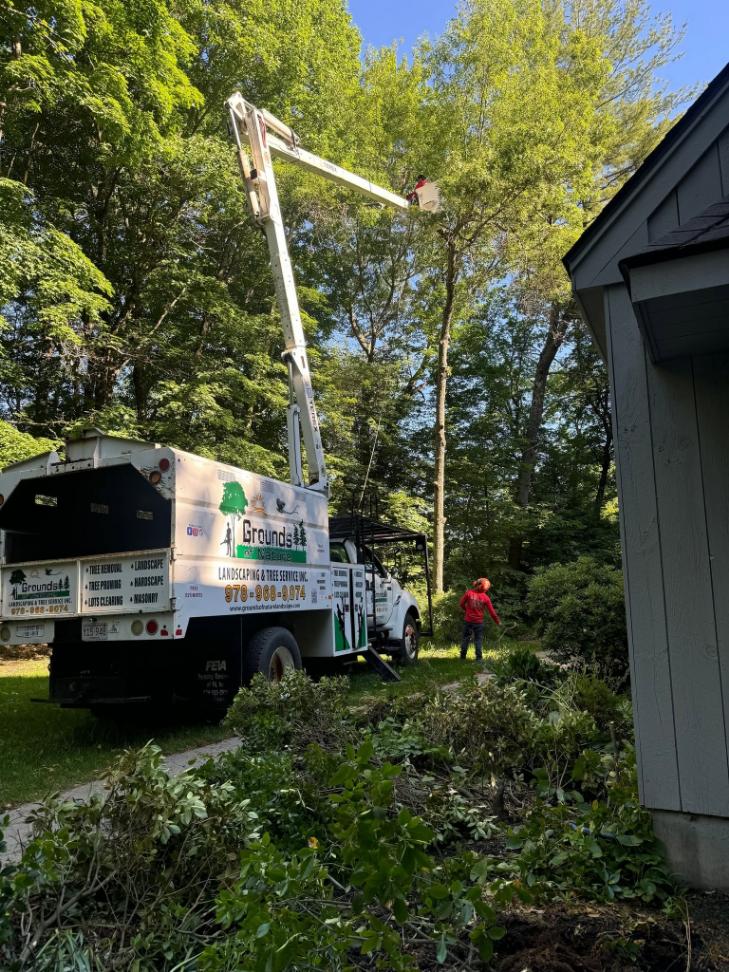
Large branches and mature trees can require specialized equipment and appropriate safety procedures. Work involving elevated limbs, heavy branches, or trees near structures should be assessed by an experienced tree-care professional.
Remember these important precautions:
- Do not climb unstable trees to remove branches.
- Do not attempt overhead cutting with a ladder and chainsaw.
- Keep people and vehicles away from an active tree-work area.
- Avoid cutting branches near electrical wires.
- Contact the appropriate utility provider when vegetation is close to power lines.
Important Safety Reminder
Never attempt to cut or move tree branches touching or hanging near energized electrical wires. Keep a safe distance and contact the electric utility for appropriate assistance.
05. Keep the Driveway and Surrounding Landscape Clear
After tree work, branches, leaves, and other organic material may remain around the property. Clearing these materials helps maintain access and keeps the outdoor area more organized.
Pay attention to the driveway edges, nearby garden beds, walking routes, and areas around outdoor structures.
For property maintenance, explore our storm cleanup services and lot cleaning services. You can also read our guide on tree debris cleanup for residential yards.
Maintain a Safer, More Accessible Outdoor Space
Regular property inspections and suitable tree-care planning can help reduce concerns around driveways, structures, and outdoor access areas.
Frequently Asked Questions
1. How do I know if tree branches over my driveway need attention?
Look for low branches interfering with vehicles, damaged limbs, visible cracks, dead sections, or branches contacting nearby structures. A qualified tree-care professional can assess the appropriate next step.
2. Can I remove large branches hanging over my driveway myself?
Large, elevated, or damaged branches can be hazardous. Professional assistance is recommended when specialized equipment or climbing is required.
3. What should I do about branches close to electrical wires?
Keep away from the branches and do not attempt to cut them. Contact the electric utility to arrange appropriate assistance.
Grounds of Nature Landscaping And Tree Services
Explore property care and outdoor improvement services at Grounds of Nature Landscaping And Tree Services.