

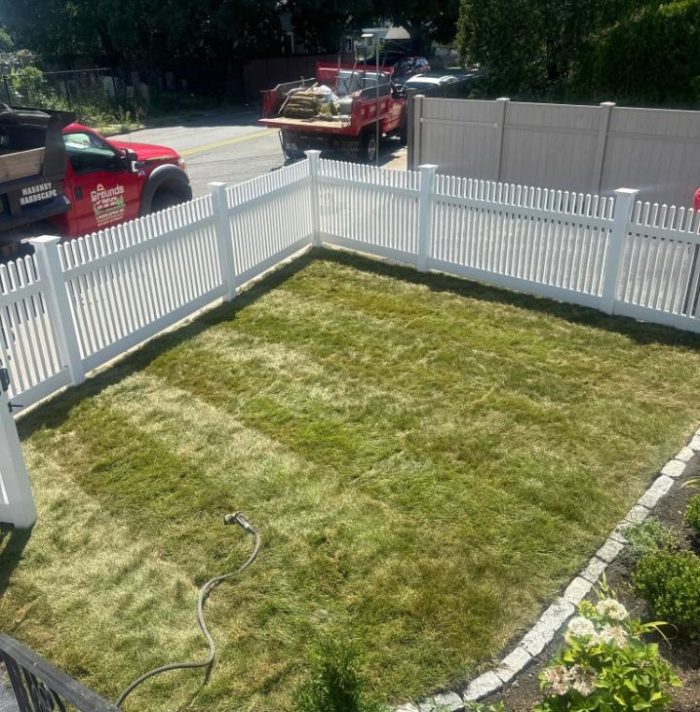
A well-defined lawn can make a residential property look more organized without requiring an elaborate landscape design. This project features a neatly maintained grass area bordered by a white vinyl fence, with a contrasting stone edge separating the lawn from a planted landscape bed. The combination creates a clear transition between different parts of the yard. Grounds of Nature Landscaping And Tree Services can use details like these to create outdoor spaces that look structured, practical, and easier to maintain.
Why Lawn Edging Around a Fence Matters
The boundary between grass and other landscape areas can have a major effect on the overall appearance of a yard. Without a defined edge, grass can gradually spread into planting beds, walkways, or other areas.
Lawn edging around a fence establishes a visible boundary and helps separate the turf from surrounding landscape elements. In the featured project, the stone border follows the perimeter of the lawn while the white fence provides a second visual boundary.
This creates layers within the landscape rather than allowing the entire yard to appear as one continuous surface.
Creating a Defined Transition Between Lawn and Landscape Beds
A landscape bed beside a lawn can contain shrubs, flowers, mulch, or other plantings. Keeping the edge clearly defined helps each area maintain its intended shape.
The featured yard demonstrates this approach with a planted bed positioned alongside the grass and a light-colored stone border separating the two. The curved edge also follows the shape of the property, giving the yard a more natural transition.
For homeowners considering Landscape Design and Installation, thoughtful transitions between lawn and planting areas can be an important part of the overall layout.
The goal does not have to be complicated. A clearly defined boundary can make a relatively simple residential yard feel more intentional.
How Defined Lawn Borders Support Yard Maintenance
A clear lawn edge can also make routine maintenance more manageable. When the boundary between turf and planting beds is easy to identify, maintenance crews have a clearer area to work within.
Defined edges can help with tasks such as trimming around landscape features and keeping grass from visually blending into planting areas. The stone border shown in the image provides a physical and visual separation that complements the surrounding lawn.
For properties that require ongoing Yard Maintenance, small structural details like lawn borders can contribute to a cleaner overall appearance.
Choosing a Border That Fits the Existing Landscape
The border material should work with the property’s existing architecture and landscape features. In this project, the light-colored edging complements the white fence while creating contrast with the green lawn and darker planting soil.
A border can also follow straight lines, curves, or other shapes depending on the layout of the property. The right shape can help define a usable lawn area while preserving space for plants and other landscape elements.
Instead of treating the lawn and planting beds as separate projects, homeowners can consider how their edges work together as part of the entire landscape.
Combining Lawn Areas With Simple Landscape Features
A residential yard does not need numerous decorative elements to have visual structure. The featured project uses several straightforward components: a maintained lawn, a white fence, a stone border, and planted areas.
Together, these elements create distinct zones within the property.
This type of approach can be especially useful when homeowners want their outdoor space to remain functional while still having a finished appearance. Landscaping can incorporate practical boundaries and planting areas without making the yard feel overcrowded.
The result is a space where the lawn remains open and usable while the perimeter provides room for additional greenery.
Maintaining the Finished Appearance
Once a defined lawn border is established, regular care helps preserve its appearance. Grass should be maintained so that it does not visually overwhelm the edge, while planting beds should remain organized and free from unwanted growth.
Seasonal changes can also affect how the boundary looks. Plants grow, soil shifts, and lawn conditions change throughout the year, so periodic attention may be needed to keep the transition between areas clearly visible.
This is where ongoing Yard Maintenance can complement the original landscape work.
Grounds of Nature Landscaping And Tree Services can help homeowners maintain the relationship between lawn areas, planting beds, and other visible landscape features.
A Small Detail With a Noticeable Landscape Impact
The featured property shows how a defined lawn edge can contribute to a more organized outdoor space. The stone border separates the grass from the planted bed, while the fence creates a clear perimeter around the yard.
For homeowners planning a landscape improvement, establishing clean transitions between different areas can be just as important as choosing plants or decorative features. A carefully planned lawn boundary can help the yard look more intentional while supporting ongoing maintenance.
Grounds of Nature Landscaping And Tree Services can incorporate practical landscape boundaries into residential outdoor spaces based on the property’s existing layout and features.
FAQ
What is lawn edging around a fence?
Lawn edging around a fence is a defined boundary that separates grass from the fence line or adjacent landscape areas. It can be created using stone or other suitable landscape materials.
Does lawn edging help with yard maintenance?
A clearly defined edge can make the boundary between turf and planting areas easier to identify during routine maintenance and trimming.
Can lawn edging be curved?
Yes. Lawn borders can follow curved or straight layouts depending on the property’s design. Curved borders can work particularly well around planting beds and irregular yard shapes.
What can be placed next to a lawn edge?
Depending on the landscape design, the area next to a lawn edge may contain plants, mulch, soil, stone, or other compatible landscape materials.
Can lawn edging be part of a larger landscaping project?
Yes. Lawn boundaries can be incorporated into broader Landscape Design and Installation projects to help define different areas of a residential property.