
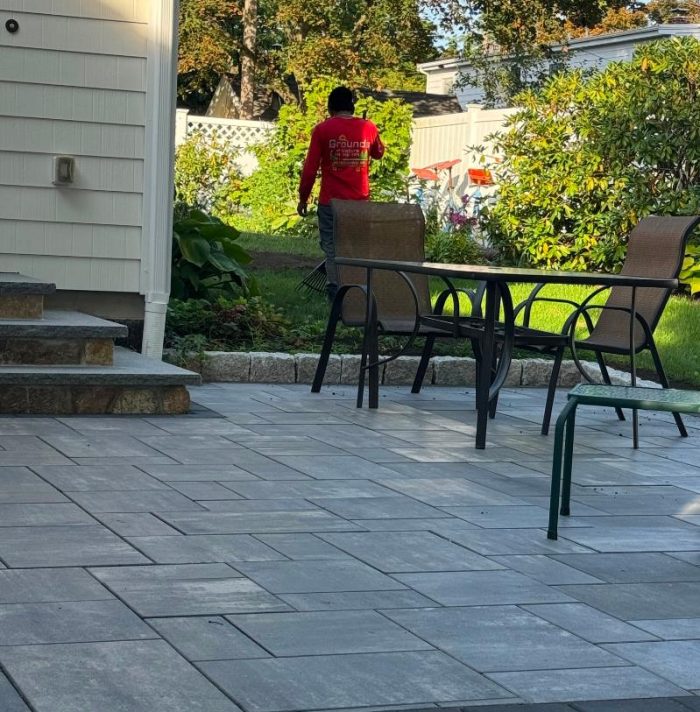
When a patio is installed close to a house, managing rainwater becomes an important part of the project. Poor grading can allow water to collect near the building instead of moving toward an appropriate drainage area.
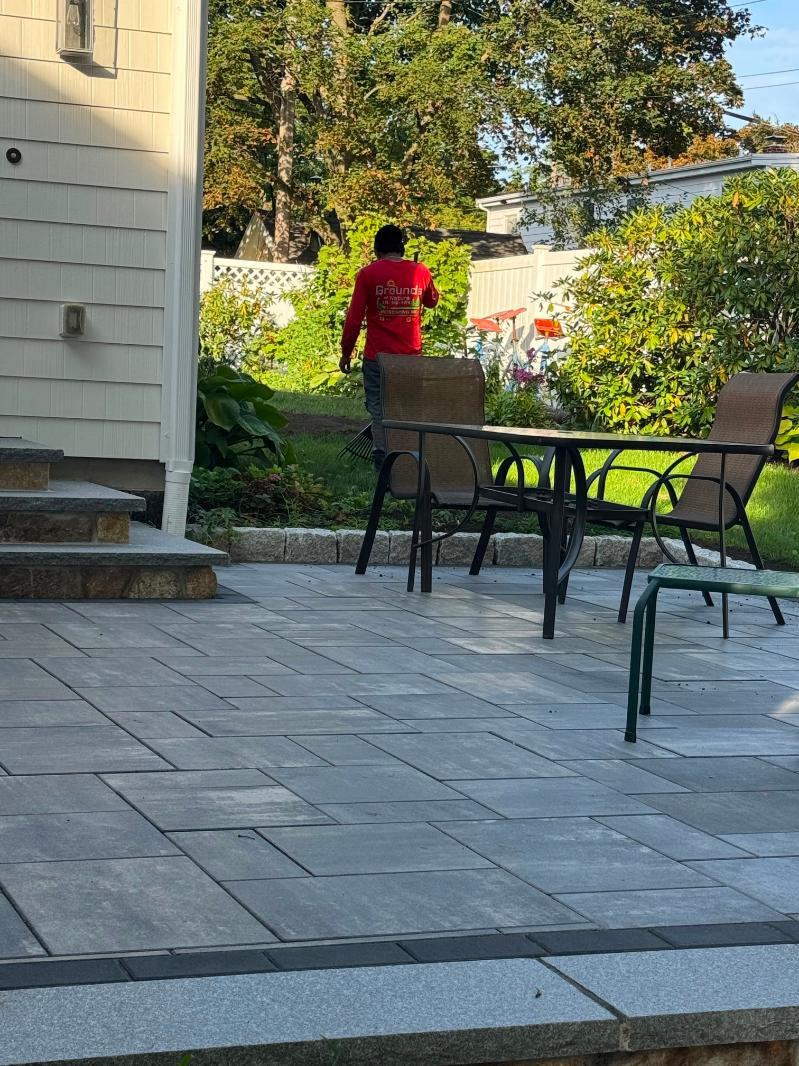
Paver patio drainage near a house should be considered during the planning and installation stages. The surface, base preparation, surrounding soil, and nearby downspouts all influence how water moves through the property.
For outdoor improvements, Grounds of Nature Landscaping And Tree Services provides landscaping and hardscaping solutions for residential and commercial properties.
Why Does Patio Slope Matter?
Hard patio surfaces do not absorb rainwater in the same way as natural soil. Water travels across the surface according to the available slope and surrounding grading.
If the finished surface directs water toward the foundation, rainwater may collect near the house, create persistent wet areas, and contribute to unwanted water intrusion.
COMMON SLOPE GUIDANCE
2% Grade
Approximately 1/4 inch of fall per foot
Actual grading should be determined according to the property, surface type, drainage conditions, and applicable local requirements.
1. Look for Water Collecting Near the Patio
One of the easiest ways to identify a possible drainage problem is to observe the patio during and after rainfall.
Pay attention to these signs:
- Standing water near the house wall.
- Repeated puddles across the paver surface.
- Water flowing toward the foundation.
- Wet soil that remains around the patio edges.
- Water collecting in low sections of the yard.
These conditions can indicate that the surface slope, surrounding grade, or drainage arrangement needs further assessment.
2. Check the Downspouts Around the House
Roof drainage can affect patio performance. A downspout that releases a large amount of water directly beside a paver surface may create concentrated runoff.
Check whether gutter outlets discharge toward the patio, foundation, or another low section of the yard. The drainage layout should provide a suitable route for directing collected roof water away from the building.
3. Understand the Role of the Paver Base
The surface slope is important, but the material underneath the pavers also contributes to the finished result.
A properly prepared base helps support the pavers and maintain their intended elevation. Inadequate preparation or localized settlement can contribute to uneven areas where rainwater collects.
Base Preparation
Suitable base materials and proper compaction help support a stable patio surface.
Surface Grading
The finished elevation should guide rainwater toward the planned drainage direction.
Edge Conditions
Properly planned edges help maintain the paver layout and its relationship with the surrounding ground.
4. Consider Drains or Swales When Needed
Some properties have limited space for natural drainage. Retaining walls, property boundaries, nearby structures, and changes in elevation can affect where surface water can travel.
In these situations, a suitable drainage solution such as a drain or landscape swale may be considered as part of the overall design.
The right approach depends on the property’s grading, available discharge locations, and existing drainage conditions.
5. Plan Patio Installation With Drainage in Mind
Drainage should be considered before the pavers are installed rather than treated as an afterthought. Discuss the finished elevation, surface slope, water outlets, and surrounding landscape during the project planning stage.
Explore our patio services, hardscaping services, and walkway solutions when planning an outdoor improvement project.
Build an Outdoor Space With Proper Planning
A well-planned patio considers surface appearance, ground preparation, and water movement together. These elements help create a more practical outdoor living area.
Frequently Asked Questions
1. Which direction should a patio slope near a house?
A patio near a house should generally be graded to move surface water away from the foundation. The final slope depends on site conditions and applicable building requirements.
2. Why does water collect on a paver patio?
Possible causes include low spots, uneven settlement, poor grading, blocked drainage paths, or water entering from nearby roof downspouts.
3. Can patio drainage problems be corrected without replacing every paver?
Some localized problems may be addressed by adjusting affected sections or improving drainage. More extensive grading or base problems may require a larger repair.
Grounds of Nature Landscaping And Tree Services
Explore our website for landscaping, patio, and hardscaping services.