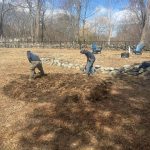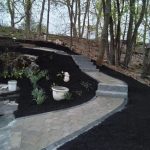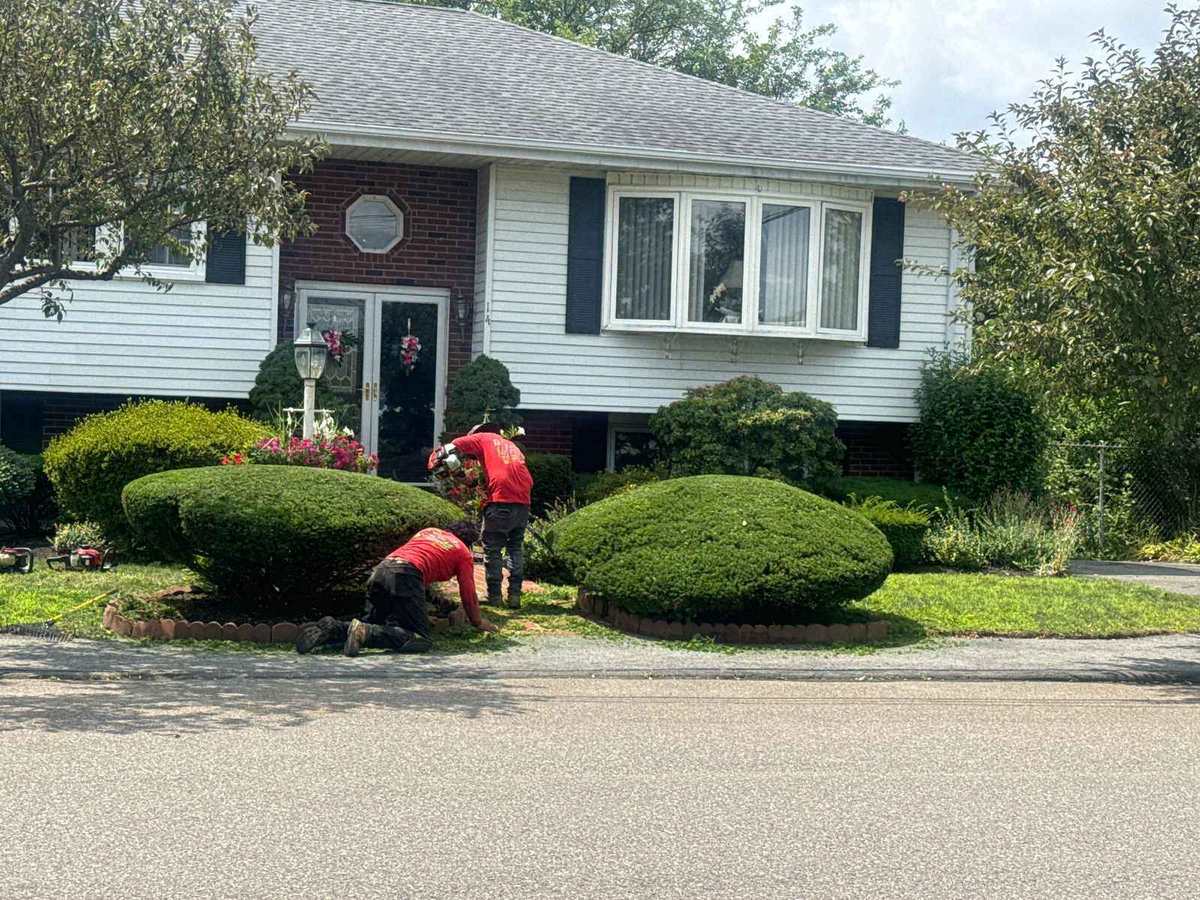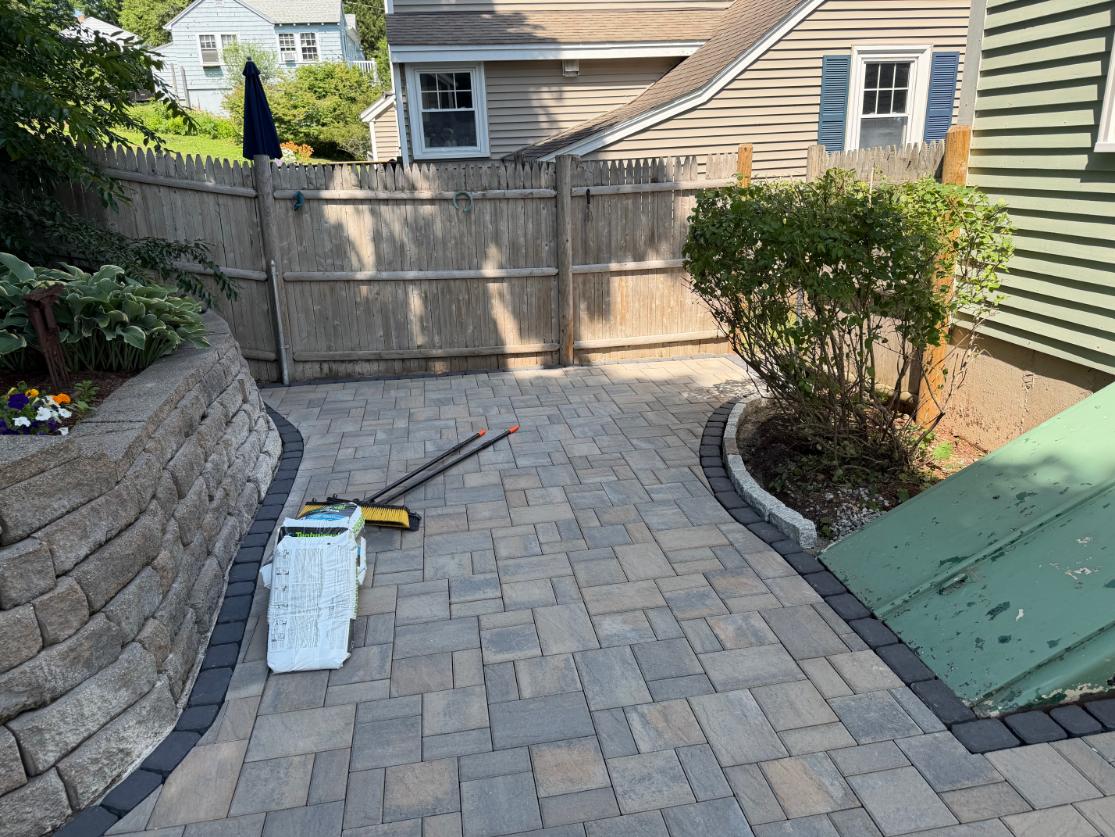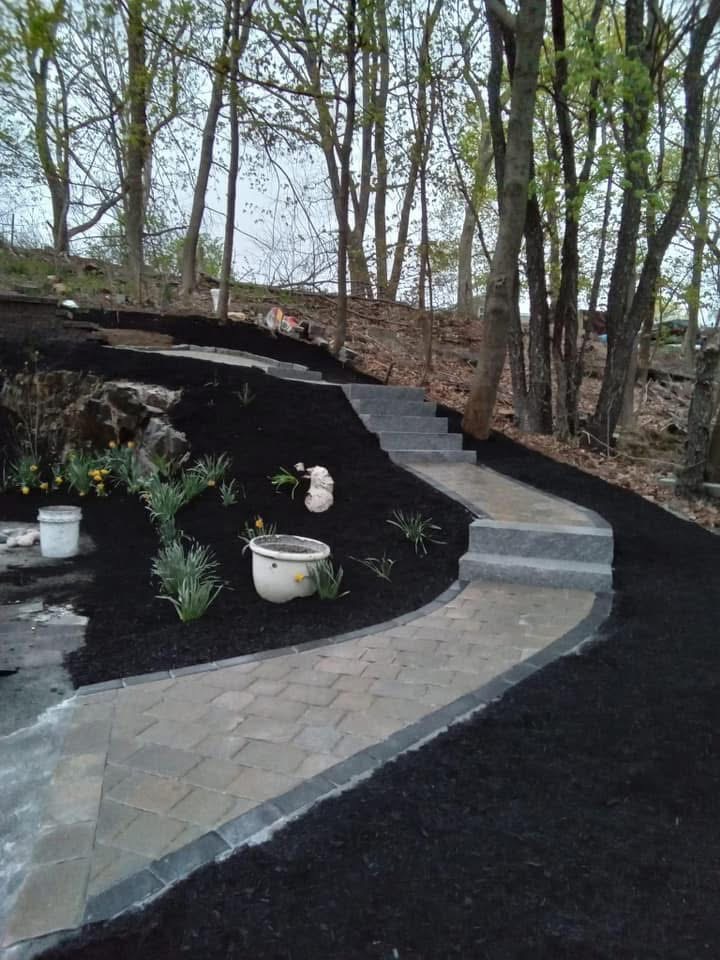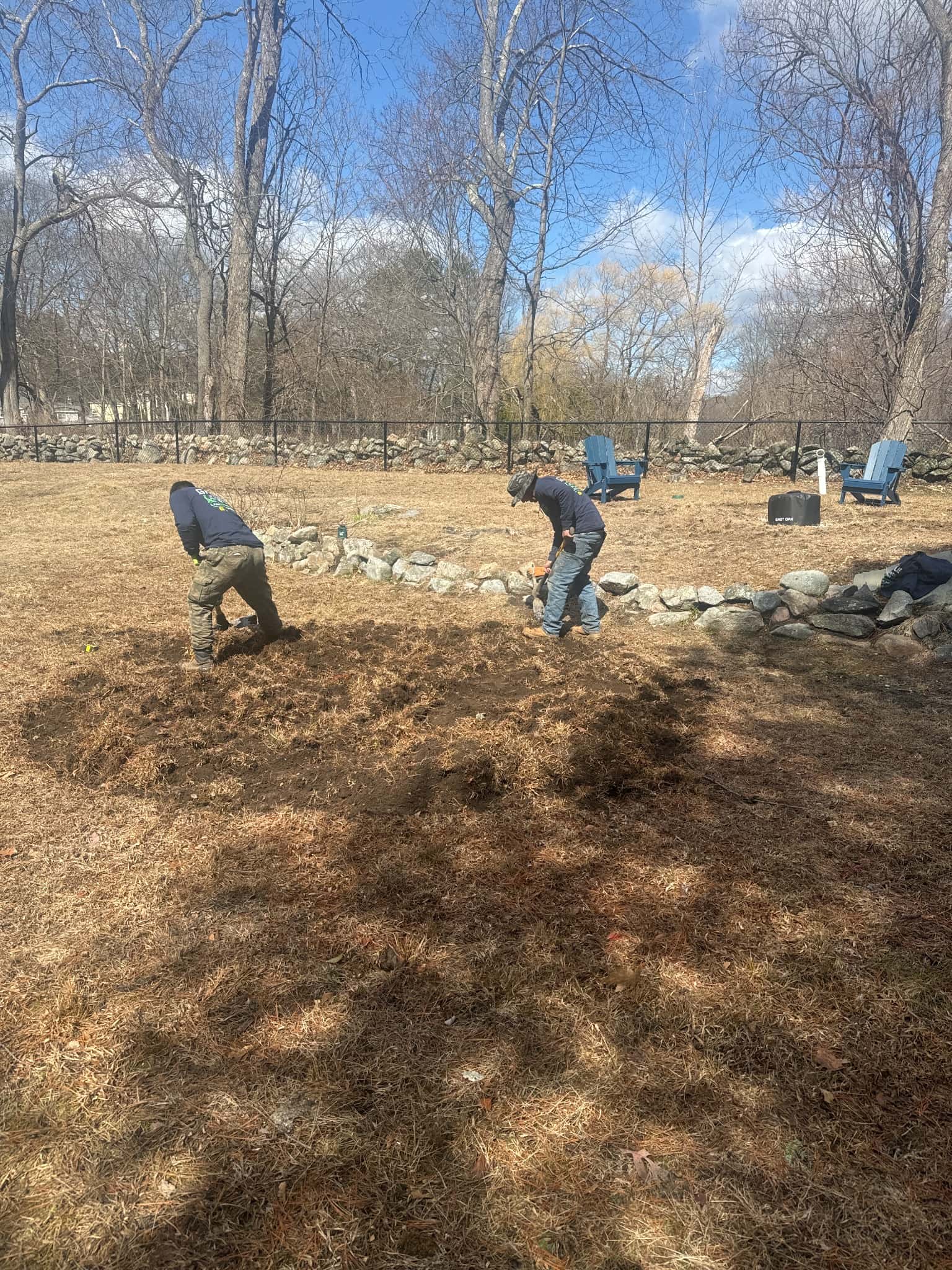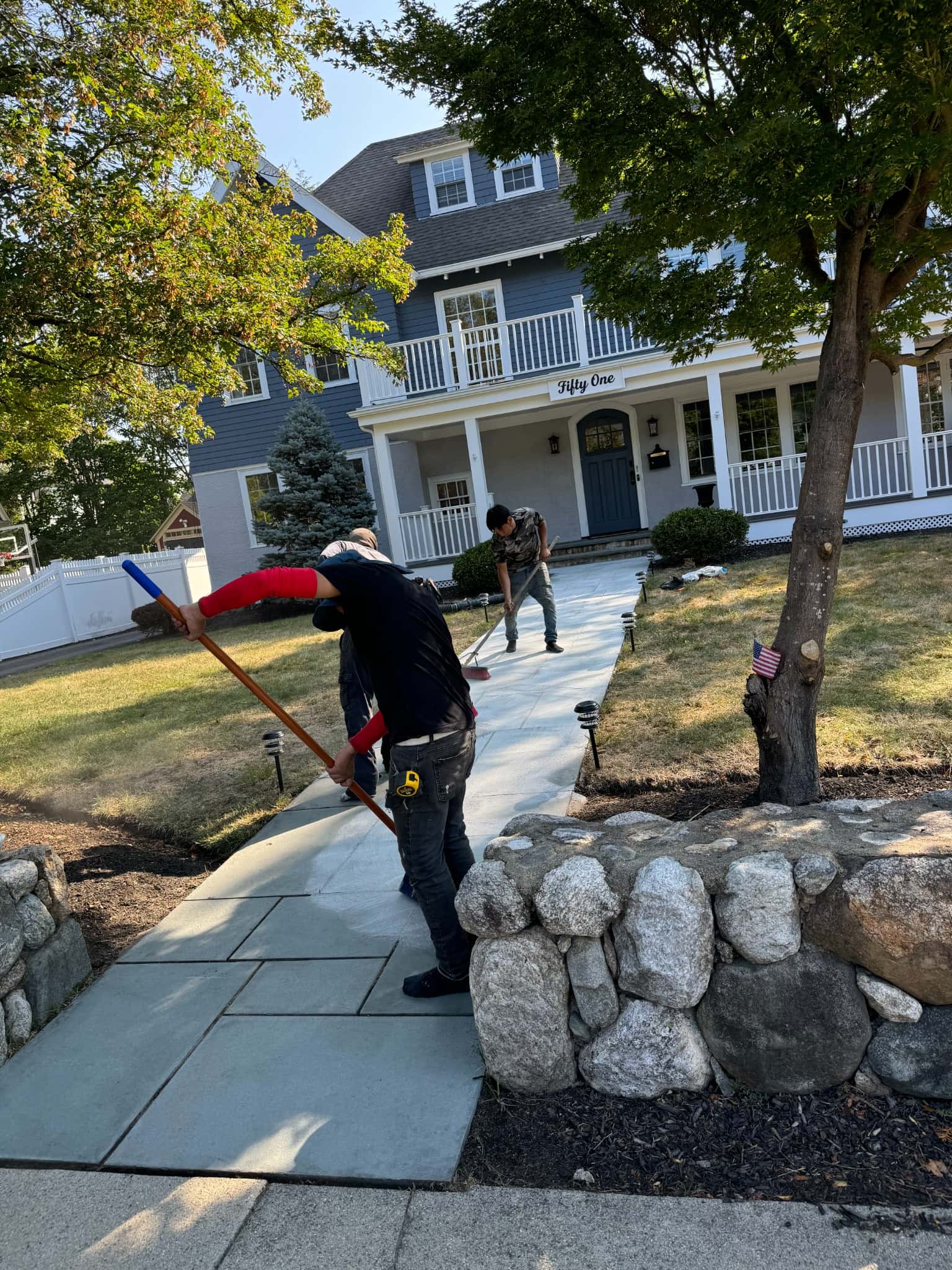

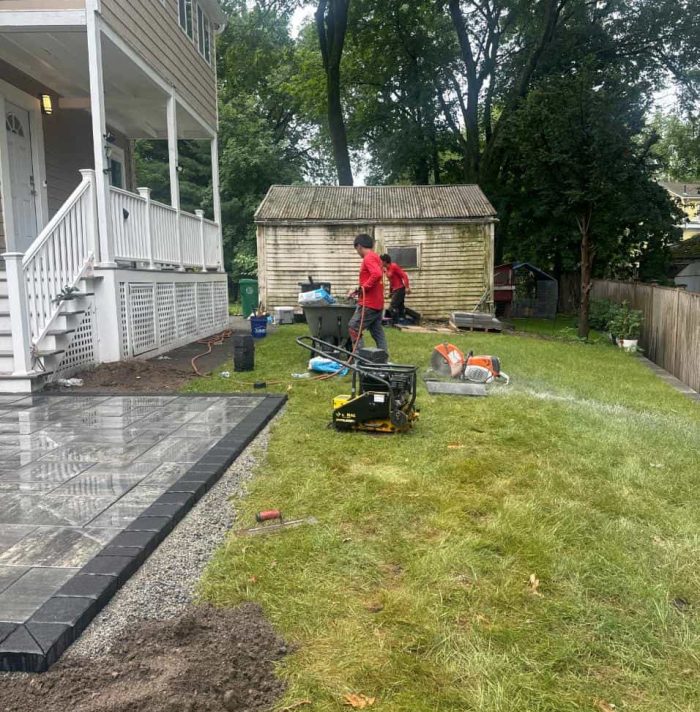
A new paver patio can dramatically improve a backyard, but the project is not finished when the pavers are installed. Landscaping around a paver patio helps connect the hardscape with the existing lawn, define clean edges, and restore areas disturbed during construction. This project shows a residential yard where a new paver surface is being completed while the surrounding soil and lawn are being prepared for a finished landscape. Grounds of Nature Landscaping And Tree Services can coordinate the landscape work needed to make the transition between patio, lawn, and planting areas look intentional and well maintained. The existing site also fits within the company’s broader landscaping and hardscaping services.
Why Landscaping Around a Paver Patio Matters
The area immediately surrounding a new patio often receives as much attention as the patio itself. Construction can disturb grass, expose soil, and leave uneven transitions along the hardscape.
Proper Landscape Design and Installation creates a smoother connection between these surfaces. The finished landscape can include clean lawn boundaries, planting beds, decorative stone, or other elements that frame the patio without making the yard feel crowded.
A well-planned transition also makes routine mowing and maintenance easier. Instead of dealing with irregular soil edges or loose material spilling onto the pavers, homeowners can have clearly defined areas that are easier to maintain.
Creating Clean Lawn Edges Around a Paver Patio
One of the most important details in landscaping around a paver patio is the transition between the pavers and grass. In the pictured project, the lawn meets the newly installed patio along a clearly defined edge with a prepared strip of aggregate.
Creating a stable edge helps prevent soil and grass from creeping onto the pavers. It can also give the patio a more finished appearance once construction equipment and excess materials are removed.
Depending on the property, the landscape contractor may need to reshape soil, remove damaged turf, establish a new edge, and repair areas affected by excavation. These finishing steps can make a substantial difference in how the completed project looks from the house and throughout the backyard.
Restoring the Yard After Patio Construction
Patio construction can involve excavation, base preparation, grading, and movement of heavy equipment. Those activities may temporarily disturb nearby lawn areas, particularly where workers need access to the patio site.
Once the hardscape work is complete, Lawn Care can address the surrounding turf and help return the yard to a cohesive appearance. Damaged or thin areas may require soil preparation and new grass, while sections that remain healthy can simply be reshaped and maintained.
It is important to consider drainage during this stage. Soil should not be placed in a way that directs water toward the house or creates low spots beside the patio. Proper grading can help water move away from structures while protecting the newly installed hardscape.
Combining Softscape and Hardscape Features
A successful backyard design balances hard surfaces with living landscape elements. A large paver patio can provide a practical outdoor living area, while surrounding lawn and planting areas soften the overall appearance.
For properties like the one shown, landscaping can remain relatively simple. A clean lawn border may be enough to complement the patio, or homeowners may add planting beds along the house or perimeter where appropriate.
Patio Installation and surrounding landscape work can also be planned together so elevations, edges, drainage, and access are considered from the beginning. This approach helps avoid a finished patio that looks disconnected from the rest of the property.
Planning a Finished Backyard That Lasts
The best results come from treating the patio and surrounding landscape as one complete project. Before finalizing the landscape, homeowners should consider how they will use the patio, where lawn equipment will travel, how water will drain, and how much maintenance they want.
A properly prepared transition can reduce ongoing problems such as eroding soil, grass growing into joints, and messy edges. It can also make the entire backyard appear more intentional and professionally completed.
For homeowners planning a new patio or updating an existing outdoor space, Grounds of Nature Landscaping And Tree Services can combine hardscape construction with complementary landscape improvements. The company’s sitemap includes dedicated landscaping, hardscaping, patio, lawn care, and landscape design services, making these related improvements part of a broader outdoor property strategy.
FAQ
What is the best way to landscape around a paver patio?
Start with a stable transition between the pavers and surrounding lawn or planting beds. Proper grading, clean edging, and appropriate soil preparation help create a finished appearance and support long-term drainage.
Can a lawn be restored after paver patio installation?
Yes. Areas disturbed during patio construction can often be reshaped, prepared, and repaired with new or existing turf. The right approach depends on the condition of the soil and grass after construction.
Why is grading important around a paver patio?
Proper grading helps direct water away from the home and prevents standing water near the patio. It also creates more stable transitions between the hardscape and surrounding landscape.
Can landscaping be completed at the same time as patio installation?
Yes. Coordinating Patio Installation with landscape work allows the contractor to plan elevations, drainage, lawn edges, and planting areas as part of one cohesive project.